May 21, 2015

Hearing the Economic Signals amid the Economic Noise

Remember our blog about “inflection points”—a term Intel’s Andy Grove coined to help businesses identify significant shifts that could spell trouble for a company’s products and services? Inflection points often show up in graphs, tables, and statistical indicators.  Ironically, there is no dearth of such indicators when it comes to business and economics, and that’s a big problem, according to Nate Silver, author of The Signal and Noise: Why So Many Predictions Fail—But Some Don’t (2012).
Image Source: http://bit.ly/1e5OZsi

Why?  Because “we face danger whenever information growth outpaces our understanding of how to process it.” Ironically, the human race has survived because human beings are good at processing and analyzing data to discern meaningful patterns. But today the vast stream of data generated from many sources could be having unintended consequences, such as allowing us to select only that data that conforms to our preconceived ideas. Consequently, we may be missing the signals for the noise and wasting our time chasing false leads.


If this sounds too abstract for public policy, let’s turn to a recent Christian Science Monitor article about wages. Some economic signals show that wages are finally going up, which is good news, especially for states that rely on consumer spending to fill their tax coffers. But this time, things are different. People are saving their extra cash or paying down debt. “The U.S. savings rate in the first three months of 2015 increased to 5.5 percent—its highest level since the end of 2012,” the article stated. Did the economic forecasters predict the increase in savings?


In his assessment of the 2008 housing collapse and the deep recession it triggered, Silver recommended that, “we must think differently about our ideas—and how to test them. We must become more comfortable with probability and uncertainty. We must think more carefully about the assumptions and beliefs we bring to a problem.”

May 20, 2015

Feds Lower Maximum Recommended Fluoride Level for Drinking Water

As reported on NPR, the Department of Health and Human Services (HHS) recently changed its recommendation for the amount of fluoride in community water systems.  The new recommendation is 0.7 milligrams of fluoride per liter of water.  The previous recommendation, adopted in 1962, ranged from 0.7 to 1.2 milligrams, based on outdoor air temperature of geographic areas.


The new recommendation notes that “the optimal concentration of fluoride in drinking water is the concentration that provides the best balance of protection from dental caries while limiting the risk of dental fluorosis.” Dental fluorosis is a cosmetic condition characterized by changes in the appearance of tooth enamel caused by excessive fluoride intake.


The HHS recommendation is advisory only. The department first proposed the new level in 2011, but did not finalize that recommendation until April. 


As noted by NPR, fluoridation opponents argue that the new standard doesn't go far enough, and should be lowered further to avoid possible health risks due to excessive fluoride.  By contrast, the article notes that the American Dental Association supports the new recommendation.

May 19, 2015

World’s Largest Fuel Cell Park

If built, a fuel cell park planned for Beacon Falls, Connecticut will surpass a South Korean facility to become the world’s largest, according to the Hartford Courant. Developers of the Beacon Falls Energy Park have signed a letter of intent but will still need financing, engineering studies, and permits before the facility is built. They seek to build the plant over the next three years.


The planned facility would contain 63.3 megawatts of fuel cells on eight acres of land, surpassing South Korea’s 59-megawatt fuel cell park as the world’s largest. Connecticut is already home to the largest fuel cell park in the United States, a 15-megawatt facility in Bridgeport.


A fuel cell is similar to a large, continuously operating battery that produces power from an electrochemical reaction of hydrogen and oxygen. The oxygen comes from the air and the hydrogen from fuels such as natural gas. Unlike a battery, a fuel cell does not run down, as long as it is supplied with hydrogen and oxygen.


According to the Hartford Business Journal, Connecticut is one of three states that consider fuel cells to be a renewable energy.

May 18, 2015

Police Officers Begin to Use Body Cameras in Schools

During this legislative session, the Connecticut General Assembly’s committees have considered several bills about police officers’ use of body cameras while on duty.  Worn on an officer’s chest, this tiny device can record interactions between an officer and citizens.  Education Week reports that body cameras are increasingly being worn by police officers assigned to public schools, who are also known as school resource officers (SROs).

Photo by West Midlands Police / CC-BY-SA 2.0
Police departments, school districts, and student privacy advocates are at odds over whether it is good policy for SROs to wear body cameras.  (The National Association of School Resource Officers has yet to take a position on the use of body cameras in schools.)  Many police departments favor the cameras, since they provide objective evidence for use in criminal proceedings (in this case, those involving students) and could help refute or prove SRO misconduct accusations.  Some police departments have a policy that officers will switch on the cameras only when they investigate complaints or interact with students. 

Conversely, civil rights groups have argued that SROs should not wear body cameras.  They feel that student privacy concerns outweigh any benefits the cameras might have, and they fear that footage of students misbehaving could become a permanent part of their “digital footprint.”


While there are no national statistics on how many school districts allow SROs to wear body cameras, the media has reported that Memphis, Tennessee; Topeka, Kansas; and Des Moines, Iowa have recently adopted them.


Click here to read the full Education Week article.

May 15, 2015

ISO-NE Predicts Sufficient Power for this Summer

The Independent System Operator-New England (ISO-NE), which operates the regional electric grid, recently predicted that New England should have enough electric generation and demand-response resources available to serve forecasted peak demands this summer.  ISO-NE expects electric demands to peak at 26,710 megawatts (MW) under normal weather conditions of about 90 degrees Fahrenheit, although an extended heat wave in the mid-90s could push demand over 29,000 MW.  Last summer, power demands peaked on July 2nd at 24,443 MW.  The all-time record was set on August 2, 2006 when demand reached 28,130 MW. 


Click here to read more about ISO-NE’s projections.

May 14, 2015

How States Elect their Governors and Lieutenant Governors

OLR Report 2015-R-0021 outlines which states elect candidates for governor and lieutenant governor separately, and which elect them jointly.  For states that elect them jointly, it describes the procedures for nominating major party candidates for lieutenant governor.
 
According to the National Conference of State Legislatures, 18 states elect candidates for governor and lieutenant governor separately and 25, including Connecticut, elect them jointly.  Five of the seven remaining states do not have a lieutenant governor and two assign the position to the Senate president, whom the State Senate elects.
 
States holding joint elections use various procedures for nominating major party candidates for lieutenant governor.  Generally, the procedures involve:
  1. gubernatorial candidates selecting a running mate;
  2. candidates for lieutenant governor receiving their party’s nomination during the primary phase, independent of gubernatorial candidates; or
  3. political parties nominating their candidate for lieutenant governor at a state convention.
For more information, read the full report.
 

May 13, 2015

Advice for Solar Energy Installation Consumers

The Department of Consumer Protection (DCP), attorney general, and Connecticut Green Bank issued a press release on Earth Day with advice for consumers who want to lease or buy solar power. Among other things, they advise consumer to:
  1. obtain several itemized quotes from licensed or registered contractors,
  2. expect realistic savings,
  3. understand applicable tax credits and rebates, and
  4. research home insurance coverage.
The press release also encourages consumers to visit DCP’s website for information on choosing and working with contractors.

Click here to read more and find links to other resources.

May 12, 2015

U.S. Supreme Court Takes Up Same-Sex Marriage

On Tuesday, April 28, 2015, the U.S. Supreme Court heard oral arguments on the issue of whether it is constitutional for states to (1) prohibit same-sex marriage or (2) refuse to recognize same-sex marriages performed out of state.  The arguments centered on gay marriage bans in Kentucky, Michigan, Ohio, and Tennessee, four of the 13 states that currently prohibit it, according to a Reuters.com article.  The Court is expected to issue a decision by the end of June and, according to the same article, this promises to be the Court’s most anticipated ruling of the year.


The article cites a March 2015 NCSL Report, which states that in the last six months, the number of states that allow same-sex marriage has increased from 19 states and the District of Columbia to 37 states and the District of Columbia. 
Connecticut was the second state to allow same-sex marriage.  The state’s law evolved as follows:
  • 2005 - Connecticut became the second state to enact a state law providing civil unions to same-sex couples (PA 05-10)
  • 2008 - the Connecticut Supreme Court ruled that the equal protection clause of the state constitution prohibits the state from denying same-sex couples the right to marry (Kerrigan v.  Dept. of Public Health, 289 Conn.  135 (2008), read an OLR report on the case)
  • 2009 - the Connecticut General Assembly passed a statute allowing same sex marriage and ending civil unions (PA 09-13) 
 
The NCSL Report summarizes the history of same-sex marriage laws in the United States.  Read more here.  

May 11, 2015

U.S. Supreme Court Rulings and State Legislation Concerning Juvenile Sentences

A recent report, OLR Report 2015-R-0089, discusses how states have reacted to recent U.S. Supreme Court decisions on juvenile sentencing. 


In 2010, the Court held in Graham v. Florida that the Eighth Amendment prohibits states from imposing life without parole (LWOP) on juvenile defendants for non-homicide crimes (130 S.Ct. 2011 (2010)). The Court required “some meaningful opportunity” for release based on a defendant’s maturity and rehabilitation in the time since he or she committed the crime. In 2012, the Court ruled in Miller v. Alabama that courts “must take into account how children are different, and how those differences counsel against irrevocably sentencing them to a lifetime in prison” (132 S.Ct. 2455 (2012)).


OLR Report 2015-R-0089 summarizes court rulings and legislation enacted following these rulings.  At the time of the Miller ruling in 2012, at least 26 states had mandatory LWOP sentencing laws for juveniles.  At least 16 states have since amended their juvenile sentencing laws in response to the Supreme Court’s ruling that such mandatory sentences are unconstitutional. Some states kept LWOP as a possible sentence for certain offenses, while others eliminated LWOP as a sentencing option.  Some of the laws specify whether or not they apply retroactively to juvenile offenders already sentenced to LWOP.


For more information, click here to read the full report.

May 8, 2015

Food Stamps and the Law of Unintended Consequences

A recent Washington Post article notes that President Obama’s healthcare law has, in some states, had a surprising and perhaps unintended effect—it has increased the number of Americans who apply for the Supplemental Nutrition Assistance Program (SNAP, formerly known as food stamps) even though eligibility rules have not changed and the national economy has been showing signs of improvement.

Why are more people applying for SNAP? The health care overhaul not only extended coverage to more Americans, but also made it easier to access this and other government benefit programs. As the article notes, new streamlined application systems are making it easier for individuals to apply for Medicaid and food stamps at the same time.  “The food-stamp increase was not envisioned by either supporters or opponents of the new health care system,” the article noted. “While it’s unclear exactly how much growth can be attributed to the law and incentives it offered to states, the increased enrollment could be expensive. The average food-stamp recipient was paid $123.35 a month last year, according to the U.S. Department of Agriculture, which administers SNAP,” the article stated.


In Connecticut, the Department of Social Services administers SNAP, determining eligibility based on income limits that, in certain cases, include savings and investment income. For more information, including information on monthly income limits and maximum SNAP benefits per household size, visit the Connecticut Department of Social Services’ website.

Rhode Island Law to Allow Casino to Build Hotel

Prior Rhode Island law prohibited the Twin River Casino from building a hotel on its property. However, Rhode Island Governor Raimondo recently signed a bill allowing the state’s only full-fledged casino to do so, reports the Providence Journal.

The anticipated June opening of Massachusetts’ first gaming facility explains the policy shift. “As our neighboring states look to draw revenue and economic development away from Rhode Island, we need to examine every possible way to remain competitive and create more economic opportunities here in Rhode Island,” the governor stated.

The hotel will be built in the Courtyard Marriott or Hampton Inn style and will be four-stories and have 150 to 250 rooms and cost between $30 and $35 million to construct.  The project is expected to create approximately 200 temporary construction jobs and 100 full-time employees. Casino officials claim the hotel will focus on retaining “convenience gamblers” within the surrounding area, not drawing gamblers from a wider area, the article states.

May 7, 2015

Texas Takes Aim at Wrong-Way Drivers

Texas is expanding efforts to combat wrong way drivers, who recently caused several fatalities on Houston area highways.
 
The Harris County Toll Road Authority plans to expand its system, which includes warning signs to deter drivers from entering the wrong way on exit ramps. If a driver ignores the warning signs, roadway sensors trigger a response in the toll road’s control room, alerting dispatchers to notify police. Cameras on the roadway automatically shift to provide the control room with a view of the car’s path. Next, electronic signs on the toll road change, warning oncoming drivers to pull over and stop. Finally, police position themselves to set up spike strips to stop the wrong way vehicle.

The Toll Road Authority is planning to add more LED warning signs, and the state transportation authority is studying similar technology for San Antonio.


More information is available here.

May 6, 2015

CDC Reports Spike in Teen Use of E-Cigarettes and Hookahs

According to the federal Centers for Disease Control and Prevention (CDC), “e-cigarette use among middle and high school students tripled from 2013 to 2014,” increasing from approximately 660,000 to 2 million students.  The CDC based this finding on data from the 2014 National Youth Tobacco Survey, which it characterizes as a nationally representative school based, self-administered survey given to 22,000 middle and high school students.

Specifically, e-cigarette use (i.e., once a day use for the past 30 days) among (1) high school students increased from 4.5% to 13.4% and (2) middle school students increased from 1.1% to 3.9%. E-cigarettes were the nicotine products most commonly used by teenagers and adolescents in 2014.

The survey results also indicated that hookah use among that population approximately doubled during the same period (i.e., from 5.2% to 9.4% among high school students and from 1.1% to 2.5% among middle school students.)


In the press release on the findings, CDC Director Tom Frieden, M.D., M.P.H., noted “[N]icotine is dangerous for kids at any age, whether it’s an e-cigarette, hookah, cigarette, or cigar…exposure at a young age may cause lasting harm to brain development, promote addiction, and lead to sustained tobacco use.”

May 5, 2015

The Right to Hunt and Fish

According to the National Conference of State Legislators (NCSL), sportsmen in many states feel their ability to hunt and fish is in danger because of “increasing urbanization, decreased habitat, declining numbers of sportsmen, and more restrictions on hunting.” Development, deforestation, and competition from other recreational groups such as hikers and all-terrain vehicles also limit the space sportsmen have to hunt and fish. Consequently, sportsmen are “turning to the state constitutions to ensure that their pastime will continue in perpetuity.”

According to NCSL, the following 18 U.S. states guarantee a person’s right to hunt and fish in their constitutions: Alabama, Arkansas, Georgia, Idaho, Kentucky, Louisiana, Mississippi, Minnesota, Montana, Nebraska, North Dakota, Oklahoma, South Carolina, Tennessee, Vermont, Virginia, Wisconsin, and Wyoming. Also, residents of California and Rhode Island enjoy a constitutional right to fish, but not to hunt.


In 2015, NCSL is tracking bills in the following nine states that would grant a state constitutional right to hunt and fish: Indiana, Kansas, Maine, Michigan, Nevada, New Jersey, New York, Oregon, and Texas. But opponents of these constitutional amendments believe constitutions should not protect recreational pastimes.

May 4, 2015

Medicare and the Older Americans Act Turn 50

This summer, Medicare and the Older Americans Act turn 50.

The Social Security Amendments of 1965 (Pub.L. 89–97, 79 Stat. 286), which created Medicare, were signed into law on July 30, 1965 by President Johnson.

According to the Hartford Courant, 265,000 Connecticut citizens, or almost 10% of the state’s population of the time, were eligible for Medicare insurance when the bill passed. Currently, over a half-million Connecticut citizens, and approximately 50 million people nationwide, are Medicare beneficiaries.

The Older Americans Act (Pub. L. 89-73, 79 Stat. 218), signed July 14, 1965, provided funding for elderly support programs and created a national network of Agencies on Aging and the federal Administration on Aging (AoA) to oversee it.

The AoA keeps a detailed history on the evolution of programs for the elderly.

Image Source: LBJ Library Photo Archive


May 1, 2015

Traumatic Brain Injury Prevention a Primary Focus for Lawmakers

Traumatic brain injury (TBI) affects millions of people each year and causes an average annual death toll of 50,000. While tragic and sometimes fatal athletic injuries have made TBI a primary focus for the public and lawmakers, falls are the leading cause of TBI across all age groups, according to the CDC.  From 2006 to 2010, falls were the cause of 40% of all TBI that led to an emergency room visit, with a majority of these by adults aged 65 or older.  Unintentional blunt trauma and motor vehicle crashes round out the top three causes.
 
Legislation was passed in all 50 states from 2009 to 2014 with the goal of limiting TBI. Lawmakers varied in their approach.  For example, some states created mandatory education for student athletes, parents of student athletes, athletic coaches, and athletic trainers.

In 2010, Connecticut passed PA 10-62 which requires school athletic coaches to complete annual training on concussions and head injuries. The act also requires coaches to take a student athlete out of a game or practice if the athlete is diagnosed or suspected of having a concussion.  The coach must keep the athlete out of any game or practice until the athlete has received written clearance to return from a licensed medical professional.

PA 14-66 further addressed these issues.  For example, starting in the 2015-2016 school year, the act prohibits student athletes from participating in athletic activities until the student and his or her parent or guardian have read material, viewed a video or online training, or had in-person training regarding concussions.
 
The problem continues to be addressed this session.  According to Kate Blackman of the National Conference of State Legislatures, more than 100 bills have been introduced in 2015 related to TBI awareness, prevention, and rehabilitation.

New Report: State and Federal Home Repair and Rehabilitation Programs

OLR Report 2015-R-0097 describes state and federal government home repair and rehabilitation programs available to homeowners.

 The state and federal governments administer several home repair and rehabilitation programs available to homeowners. Eligibility criteria (e.g., income limits, eligible geographic locations) vary among programs. For example, (1) the federal Department of Veterans Affairs (VA) offers two home renovation programs for veterans with certain service-connected disabilities and (2) the state Department of Economic and Community Development (DECD) offers a program open only to owners of historic homes. The state and federal governments also provide funding to municipalities, businesses, and nonprofit organizations offering home repair and rehabilitation services to homeowners.


To read more about these programs, click here to read the full report.

April 30, 2015

New Federal Law Removes Social Security Numbers From Medicare Cards

According to a recent New York Times article, President Obama signed legislation in April that prohibits Medicare from imprinting Social Security numbers (SSNs) on Medicare cards. Although most private insurers no longer use SSNs for identification purposes, Medicare has continued to imprint them on over 50 million benefit cards.

Congress appropriated $320 million over four years from Medicare’s two trust fund accounts to pay for the new cards. These accounts are funded by beneficiary premiums and payroll and other taxes, among other sources. Medicare administrators must start issuing cards with new identifiers within four years. They have an additional four years to reissue cards to current beneficiaries. (Presumably, SSNs will be replaced with a randomly generated identifier.)


According to the article, Congress passed the legislation in response to the increased use of electronic health records and rising prevalence of identity theft.  Various federal officials and government watchdogs have called for the removal of SSNs from Medicare benefit cards for several years. For example, since 2004, the Government Accountability Office has urged officials to stop using SSNs as identifiers. And, in 2008, the Social Security inspector general called for the immediate removal of SSNs from Medicare cards, citing the unnecessary risk of identity theft. 

April 29, 2015

New Report: Home Improvement Guaranty Fund

OLR Report 2015-R-0099 provides an overview of the Home Improvement Guaranty Fund, including fund-related statistics. 


The Home Improvement Guaranty Fund was established in 1988 to reimburse consumers (up to $15,000 per claim) unable to recover losses suffered because the registered contractor failed to fulfill a contract valued over $200 (CGS § 20-432).


According to the Department of Consumer Protection, in the last five fiscal years, the guaranty fund was used to pay restitutions totaling $10,196,669.21 (1,297 consumer claims averaging approximately $7,900 each).


Click here to read the full report.

April 28, 2015

When High Prices in Toll Lanes Don’t Keep Traffic Moving, Cities Look for New Ways to Combat Congestion

Building high-occupancy toll (HOT) lanes—in which carpoolers ride free and single riders pay a toll, increasing with congestion, to use the lane—is a popular strategy for states and cities looking to pay for new roads and reduce congestion. But, according to a recent Governing article, HOT lanes don’t always keep traffic moving as quickly as states and cities may hope—even when toll prices are very high.

Georgia and Los Angeles County use HOT lanes, but traffic still moves slowly in peak times. In Los Angeles, traffic gets so heavy at peak hours (when tolls reach $15) that officials have to close HOT lanes to single riders for 15 minute periods to ensure room for carpoolers and buses. Even though the toll gets as high as $10, Georgia’s road and toll way authority’s executive director says that most people don’t complain because traffic on the toll lanes moves faster.

Although the high prices certainly help pay for the new lanes, they don’t seem to have fully accomplished the goal of getting fewer people to commute alone. In Northern Atlanta, the number of cars using the toll lanes per day has more than tripled since they opened in 2011, perhaps indicating that the new capacity has encouraged more people—not fewer— to drive alone to work.
To further reduce congestion, these regions are pursuing other strategies, such as:
  1. Toll Credits—Los Angeles County offers $5 in toll credits to riders who use buses along the same route 32 times during rush hour; 
  2. Targeting Heavy Users—Georgia reaches out to people who drive at peak times (and pay peak tolls) four to five times a week to encourage them to drive at less congested times or work from home; and
  3. Making Carpooling and Using Transit Easier—Georgia Commute Options, a Georgia Department of Transportation initiative, provides a ride matching service to help commuters find car and vanpools and offers cash and prizes to people who commute to work in ways other than driving alone.
 

Increase in Connecticut’s Osprey Population

According to a recent report from the Connecticut Audubon Society on the state’s osprey population, the number of documented osprey nests in Connecticut increased 176% from 2010 to 2014. Ospreys are large predatory raptors that feed mostly on fish and in 1970 there were only eight known nesting pairs in the state. The report credits the population increase to (1) a federal ban on the use of the pesticide DDT in 1972 and (2) volunteer efforts to build osprey platforms and watch over nests.


The 2014 data was acquired through a stewardship program called Osprey Nation, a statewide effort by the Connecticut Audubon Society and the Department of Energy and Environmental Protection. The program has two primary goals: supporting scientific osprey research and building a “citizen science program” to monitor osprey health. It also provides data on the health of the state’s (1) fish population and (2) coastal and inland waterways. The program relies on volunteers (stewards) to observe, gather, and record data; build and maintain nesting stations; and educate the public.

April 27, 2015

New Report: Sales and Use Tax Exemptions

OLR Report 2015-R-0104 provides a list of goods  and services that are exempt from the state sales and use tax.

 The state imposes sales and use taxes on retail sales of tangible personal property and services. It imposes a 6.35% tax, with some exceptions, on the retail sales of tangible personal property purchased (1) in Connecticut (i.e., sales tax) or (2) outside Connecticut for use here (i.e., use tax). These taxes apply to any item of tangible personal property, unless the law expressly exempts it.


The state similarly imposes a 6.35% tax, with some exceptions, on services provided by companies doing business in the state, regardless of whether they are located here. Unlike the statutes imposing the sales and use tax on tangible personal property, those imposing the tax on services specify the types of services subject to the tax and, within each type, the ones exempted from it.


To find out more about these tax exemptions, click here to read the full report.

April 24, 2015

Sheep, Wool & Fiber Festival Reminder of Connecticut’s Agricultural Heritage


For Connecticut sheep farmers, with spring comes lambing, shearing, skirting (the process of removing dirty, coarse or contaminated sections of the fleece), and preparing the wool for spinning, weaving, knitting, and crocheting. The Connecticut Sheep Breeders Association, Inc. (CSBA), formed 122 years ago, is the organization that provides expertise and resources to help farmers with breeding, maintaining a healthy and productive flock, and marketing their products. On Saturday, April 25, it will be hosting the 106th Annual Sheep, Wool & Fiber Festival to showcase all the products and programs available to members and the general public. 


    Click here for more information about the festival.


Image Source: http://bit.ly/1JyHnIn

April 23, 2015

New Study Questions “Cycle of Violence”

As noted in a recent Science Magazine article, the theory that child abuse victims are more likely to perpetrate abuse as adults is commonly referred to as the “cycle of violence.” The article describes a recently completed longitudinal study that found little evidence to substantiate this theory when it comes to physical abuse, but it did find that neglect or sexual abuse victimization may be passed from one generation to the next.


Researchers began the study in 1986, and over nearly two decades, they tracked down over 900 adults who were victimized as children in the late 1960s and early 1970s. Based on interviews and child support services court documents, the researchers found little correlation between the adults who were physically abused as children and the likelihood, compared to the study’s control group, that they would physically abuse their own children. However, the researchers also found that the adults who were sexually abused, or neglected, as children were twice as likely to have done so with their offspring, compared to the control group.


In another article about the study in U.S. News and World Report, the study’s lead researcher, John Jay School of Criminology professor Cathy Spatz Widom, noted that the results were surprising and suggested that previous studies examining the cycle often looked at the childhood histories of parents accused of abuse and neglect. She explained, “The problem there is, you miss the parents who were abused but did not go on to have these issues.”


Widom’s findings are not conclusive, however, and some experts, such as Duke University psychology professor Kenneth Dodge, question the findings related to physical abuse. In the Science article, Dodge notes that physical abuse is often difficult to document, and child protective services may instead just document neglect when they suspect physical abuse.
Click here to read the full study (subscription required).

April 22, 2015

New Report: Federally Required Customer Identification Program (CIP) for Banks

OLR Report 2015-R-0120 summarizes the major components of the customer identification program, which federal law requires banks to develop and implement.

The 2001 USA Patriot Act (P. L. 107-56) requires  banks to verify, through a CIP, the identity of people wishing to open accounts with them. The CIP requirement was implemented by federal regulations in 2003. Under the regulations, banks must develop and implement a written CIP appropriate for its size and type of business that, at a minimum, includes procedures for:
  1. performing risk-based identity verification using specified customer information,
  2. keeping records and notifying customers, and
  3. conducting comparisons with certain terrorist lists kept by the federal government.
The CIP must be a part of a bank’s anti-money laundering compliance program (31 CFR §§ 1020.220, et. seq.). 


To learn more about CIPs, click here to read the full report.
 

April 21, 2015

Habit-Forming Public Policy

When Paul O’Neill took over the Aluminum Company of America (Alcoa) in 1987, he immediately confused and shocked investors and shareholders by announcing that he was out to change specific workplace habits. Investors and shareholders were expecting the new CEO to tell them how he was going to use “alignment to achieve a win-win synergistic market advantage,” stated Charles Duhigg, author of The Power of Habit: Why We Do What We Do in Life and Business (2012).


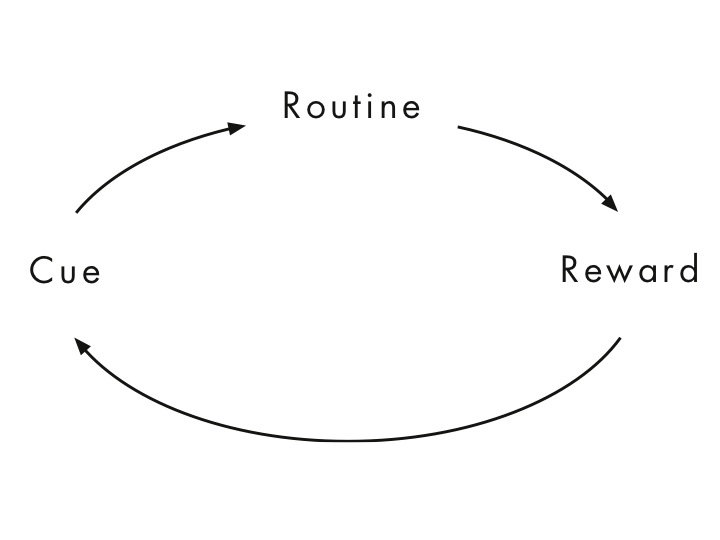
Charles Duhigg Habit Loop
Image Source: http://bit.ly/1IdPt94
The habits O’Neill wanted to change were those that lead to serious, catastrophic workplace accidents and, by the way, simultaneously drove up costs and decreased profits. But there was a method to his apparent madness. O’Neill wanted to transform Alcoa, yet he knew he could do so only if he instilled a set of habits that “would spread through the entire company.” 


O’Neill gained that insight years earlier when he worked as a middle manager in the Veterans Administration. During that time, he recorded why certain projects succeeded while others failed and figured out that government programs weren’t driven by logical rules and priorities, but “bizarre institutional processes that, in many ways, operated like habits,” Duhigg wrote. “Bureaucrats and politicians, rather than making decisions, were responding to cues within automatic routines in order to get rewards such promotions or reelection.  It was a habit loop—spread across thousands of people and billions of dollars.” 


O’Neill’s insight and Duhigg’s analysis add up to a model for developing effective public policies, the kind that stick. As the graphic suggests, habits are routines triggered by cues and sustained by rewards. An economic development policy maker for example, might use the cue-routine-reward model to identify desirable business actions, such as hiring workers or expanding facilities; the cues that trigger these actions, such as getting a government contract or increased demand for a product or service; and the rewards that sustain the action, such as higher profits. Knowing how the cues, routines, and rewards align could help policy makers design tax credits and other incentives that affect the cues that trigger desired routines. 

April 20, 2015

New Report: Nonmedical Exemptions from Childhood Vaccinations

OLR Report 2015-R-0088 provides an overview of laws on nonmedical exemptions to childhood immunization requirements.


According to the National Conference on State Legislatures, while all states require children, all states’ school immunization laws grant exemptions for medical reasons. All states, except Mississippi and West Virginia, allow religious exemptions. Twenty states allow philosophical exemptions, including two New England states (Maine and Vermont). One of those 20 states (Missouri) allows philosophical exemptions for children in day care but not in K-12 school.


Connecticut allows nonmedical exemptions for religious reasons. Specifically, Connecticut law allows parents or guardians to opt out of vaccinating their children if they present a statement that immunization “would be contrary to the religious beliefs of such child” (CGS § 10-204a). The Department of Public Health has prepared a standard form for parents or guardians seeking an exemption.


Click here to read the full report.

April 16, 2015

Hidden Consequences of Falling Behind on Student Loan Payments in Some States

Bloomburg Business reports that at least 22 states have laws on the books allowing authorities to revoke drivers’ or professional licenses when people fall behind on their student loan payments significantly.  Some states have had such laws since the 1990s.  In 2014, the National Consumer Law Center compiled a list of states with such laws that can be found here.  Connecticut is not one of these states, but Massachusetts and New Jersey have such a punishment for borrowers who default on their loans.


In support of these laws, debt collectors assert that they have been valuable tools in collecting loan payments that were well past their due dates.  They feel the laws work as a deterrent, explaining that guaranty agencies often issue license revocations only as a last resort and prefer to encourage borrowers to enroll in income-based repayment plans instead.


Opponents of such laws say that revoking someone’s driving or professional license takes away his or her ability to earn money to pay the loan back.  They argue that the loss of a driver’s license is particularly crippling in states that lack public transportation options, leaving borrowers with no way to get to work.

April 15, 2015

New Report: Municipal Affordable Housing Stock

OLR Report 2015-R-0069 describes the Affordable Housing Land Use Appeals Procedure and lists the percent of each municipality’s housing stock that was affordable, as defined by CGS § 8-30g, in 2003, 2008, and 2013.


CGS § 8-30g creates the Affordable Housing Land Use Appeals Procedure, a set of rules that allows developers to appeal to Superior Court, local zoning and planning commission decisions denying affordable housing developments or approving them with costly conditions. In traditional zoning appeals, the developer must convince the court that the commission (i.e, municipality) acted illegally, arbitrarily, or abused its discretion by rejecting the proposed development. The procedure instead places the burden of proof on the municipality. A municipality must meet certain criteria for a court to uphold the local commission's decision. (For more information, see OLR Report 2013-R-0002.)


A developer can use the procedure only in those municipalities that the Department of Housing (DOH) determines do not have enough affordable housing stock to qualify for exemption from the procedure. A municipality is exempt from the procedure if at least 10% of its housing stock:
  1. is assisted housing,
  2. is currently financed by Connecticut Housing Finance Authority mortgages,
  3. is subject to deeds and conditions restricting the sale or rental to low-and moderate-income people, or
  4. consists of mobile homes or accessory apartments subject to similar deed restrictions.
Click here to read the full report

Updated Federal Guidelines for Opioid Treatment Programs

The Substance Abuse and Mental Health Services Administration (SAMHSA) recently updated its Federal Guidelines for Opioid Treatment Programs.


The revised guidelines contain updated information on topics such as treatment of pregnant patients and patient withdrawal from medication assisted treatment.  The revised guidelines also include new information on topics such as telemedicine, electronic health records, and prescription drug monitoring programs.


According to SAMHSA, the guidelines describe the agency’s expectation of how opioid treatment programs must meet requirements in federal regulations. SAMHSA first published the guidelines in 2001, and last updated them in 2007. In 2012, the agency convened a stakeholder panel to consider updates to the guidelines.